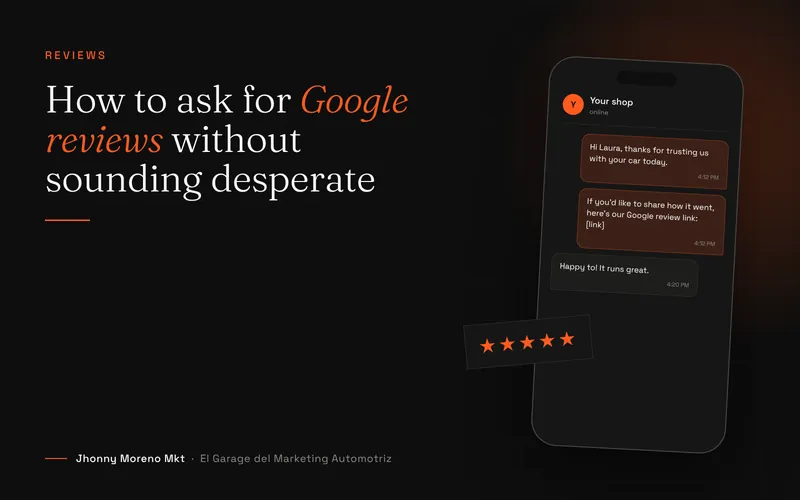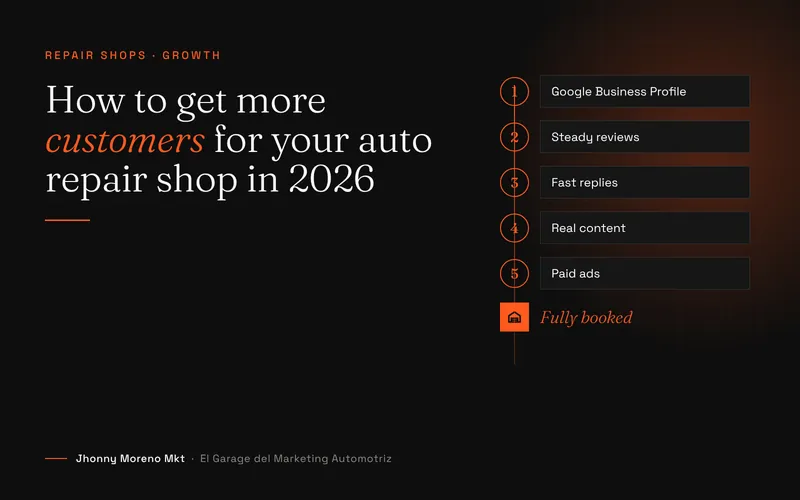
Here’s how to respond to a negative Google review: within 24 to 48 hours, publicly, calmly, thanking the customer, naming the specific problem without arguing and moving the conversation offline. Never offering anything in exchange for deleting it.
The one-star review just came in. You read it, your blood pressure went up, and your first instinct was to reply defending your work.
That instinct is exactly what to avoid. And it’s not about biting your tongue: you’re not writing the reply for the customer who complained. You’re writing it for everyone who will read it before choosing a shop.
Here’s the formula, examples for each type of complaint and what to do when the review is fake.
Why your reply matters more than the review
Think about who reads a one-star review of your shop. That potential customer isn’t reading it to rule you out. They’re reading it to see how you reacted.
The data backs it up. According to BrightLocal’s Local Consumer Review Survey 2026, 80% of consumers are more likely to use a business that responds to all its reviews, and half are put off by generic, templated replies. Speed counts too: 19% expect a reply the same day and 32% the next day.
A bad review handled well sells more than five stars with no reply.
The 4-step formula for any reply
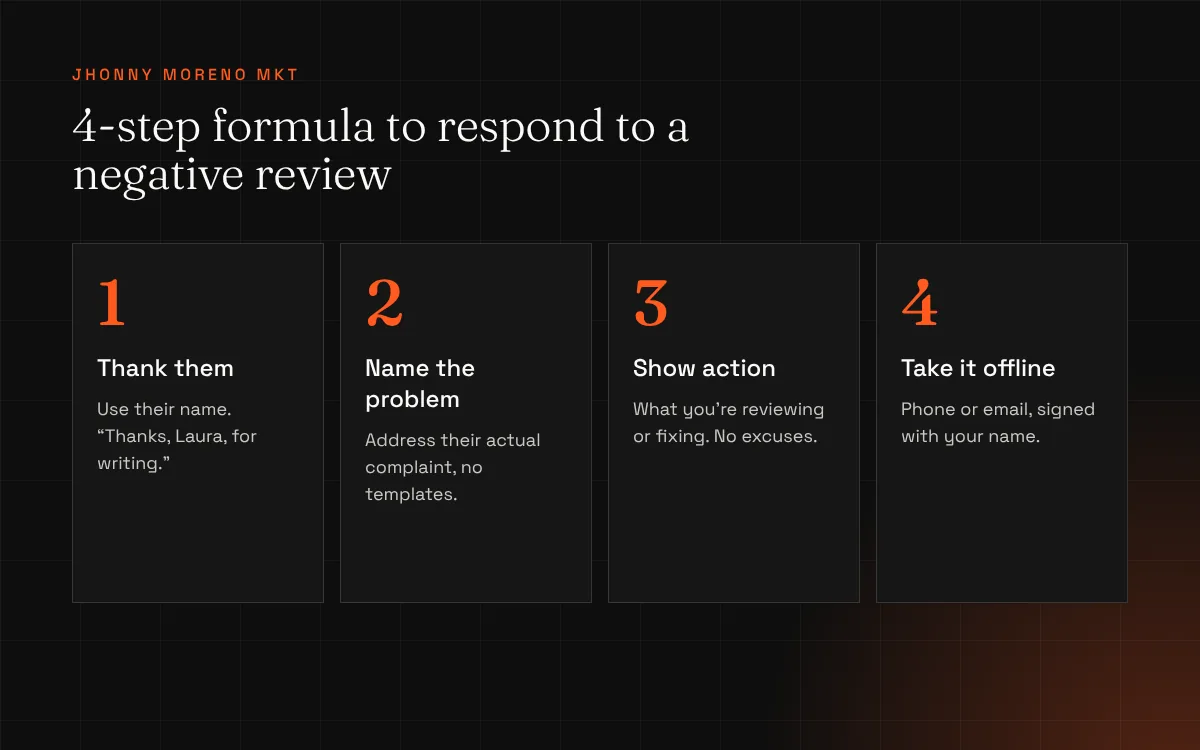
Google’s help center on managing reviews recommends replying to show customers you value their feedback. The structure that works:
- Thank them and use their name. “Thanks, Laura, for taking the time to write.”
- Name the specific problem. If they complained about a delay, talk about the delay. Show you read their review instead of pasting a template.
- Show action, not excuses. One sentence on what you’re reviewing or fixing. If it was your mistake, say so with no “buts”: it’s the last thing people expect and the thing that builds the most trust.
- Take it offline. A name, a phone number or email, and sign with your name.
Three lines are enough. If it sounds defensive when you read it out loud, rewrite it.
Examples by type of complaint
Complaint about price or the invoice
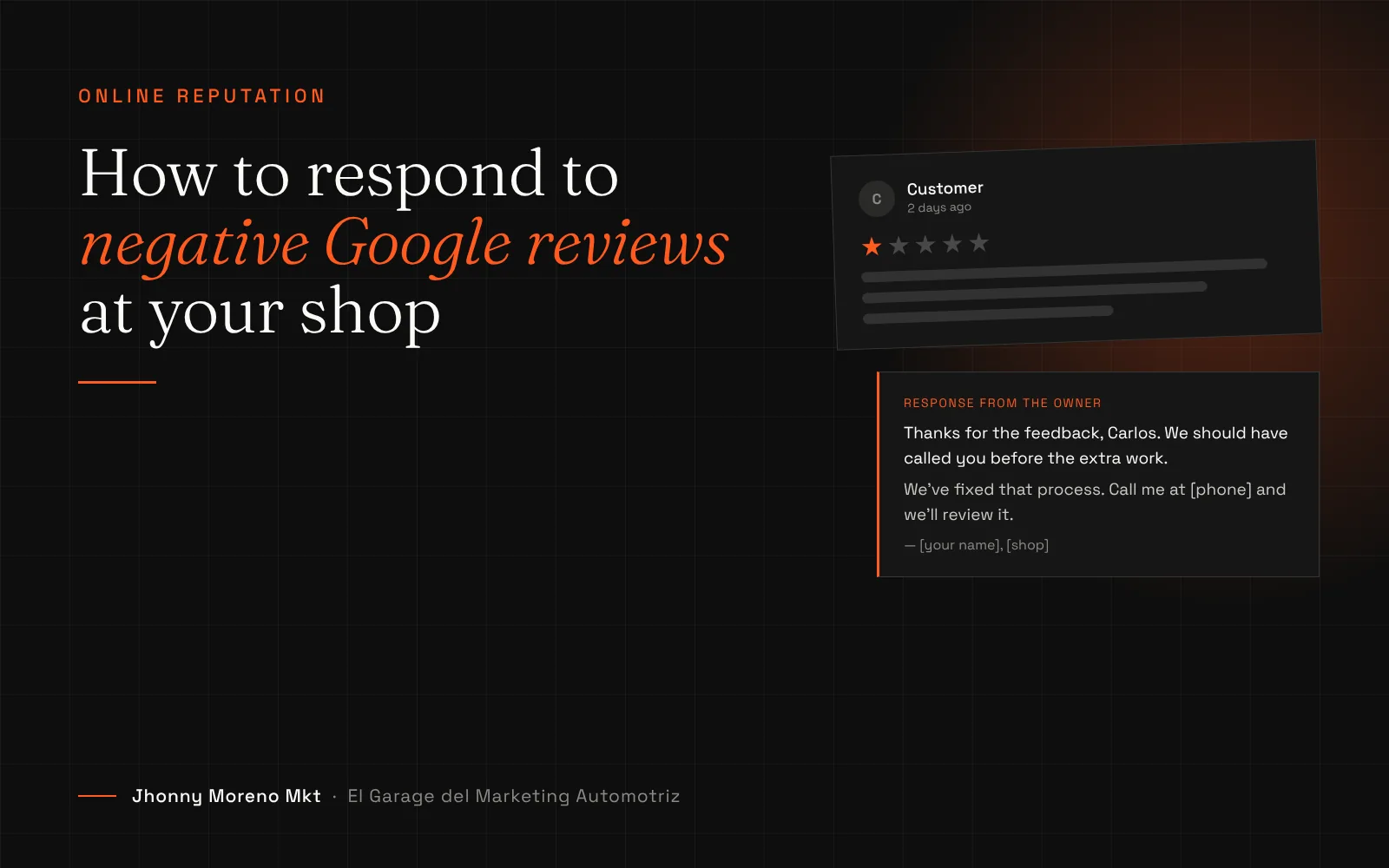
Hi Carlos, thanks for your feedback. We understand the final bill was higher than expected, and we should have called you before continuing with the extra work. We’ve gone over it with the team so any extra cost gets approved by phone first. Please call me at [phone] so I can review your case personally. — [your name], [shop]
The key: you acknowledge the experience (without blindly admitting fault), explain the fix and don’t break down the invoice in public. With money complaints, what convinces readers is the process: estimates approved before work starts, not a public defense of every charge.
Complaint about a delay
Hi Maria, we’re sorry about the wait on your car. The part arrived two days late and we should have kept you better informed. We’ve tightened up our updates with suppliers. Call us at [phone] if there’s anything else we can check. — [your name], [shop]
The problem came back after the repair
Hi Andrew, we’re sorry the issue is still there after our work, and we want to make it right. Our [X-month] warranty covers this repair: book a priority inspection at no charge at [phone]. I’ll handle it personally. — [your name], [shop]
Your warranty is your best tool here: mentioning it publicly shows every reader that you stand behind your work.
An unfair review that doesn’t match what happened
Hi [name], thanks for writing. We checked our records and couldn’t find a work order matching these details. We want to understand what happened: please email us at [email] with the approximate date of your visit and we’ll look into it with you. — [shop]
Don’t call anyone a liar. Your records and the invitation to review it speak for you.
A one-star review with no text
Hi, we saw your rating and want to understand what happened. Our goal is always to make things right: please contact [manager] at [phone] so we can review your case. Thank you. — [shop]
What never to do in a reply
| Avoid this | Why it costs you customers |
|---|---|
| Arguing technical details in public | Nobody reads five paragraphs of defense; they read that you picked a fight |
| Posting customer or work-order details | It violates their privacy and scares readers off |
| Replying while you’re angry | It sounds defensive; wait a few hours and reply calmly |
| Offering a discount to delete the review | Google prohibits it, and it looks like buying silence |
| Copying the same reply everywhere | It shows, and half of consumers are put off by templated replies |
Google’s policies prohibit offering incentives to change or remove negative reviews. If the customer has a real problem, fix it because it matters, not as a bargaining chip.
What if the review is fake?
First, an uncomfortable truth: Google won’t remove a review just because you disagree with it. It only removes reviews that break its policies: spam, fake content, conflicts of interest, insults.
If you spot a fake review (from someone who was never a customer, or a competitor):
- Reply anyway, using the unfair-review example: your records, the invitation to review it, a calm tone. Readers get the message.
- Report it from your Business Profile, choosing the exact reason that applies (here’s how Google explains it).
- Appeal if it’s rejected, using Google’s review management tool.
- If someone is extorting you (“pay me or I’ll leave bad reviews”), Google has a specific channel to report it.
Meanwhile, your best defense is volume: ask every real customer for a review. Ten honest reviews a month outweigh one fake.
Your reply routine
- Check your reviews twice a week.
- Reply to everything new within 24 to 48 hours.
- Keep this article’s templates saved and personalized with your name.
- Move tricky cases to a private channel the same day.
A well-handled negative review doesn’t scare customers away: it shows them how you’ll treat them when something goes wrong. To see what else customers check on your profile, read what customers check on Google Maps before contacting you.
Is a negative review costing you customers?
Let’s work on your shop’s reputation: steady reviews, replies that build trust and an online presence that speaks for you.
Frequently asked questions
What should I say when a customer leaves a negative review?
Thank them, mention the specific problem without arguing, briefly explain what you’re reviewing or fixing and offer a private channel (phone or email) to resolve it. Three lines, signed with your name.
Can I delete a negative review of my shop?
Only the author can delete it. You can report it if it breaks Google’s policies (spam, fake content, insults, conflicts of interest), but Google won’t remove it just because you disagree. Your public reply is your real tool.
How long do I have to respond?
Ideally 24 to 48 hours, and never while you’re angry. Replying calmly avoids a defensive tone.
Can I offer a discount to get the review removed?
No. Google prohibits offering incentives to change or remove reviews. Fix the customer’s problem because it matters, with no conditions.
Will one negative review drop me off the map?
A single review doesn’t define your position. Google looks at the whole picture: review count, rating and how complete and active your profile is. What really hurts is no new reviews and no replies.